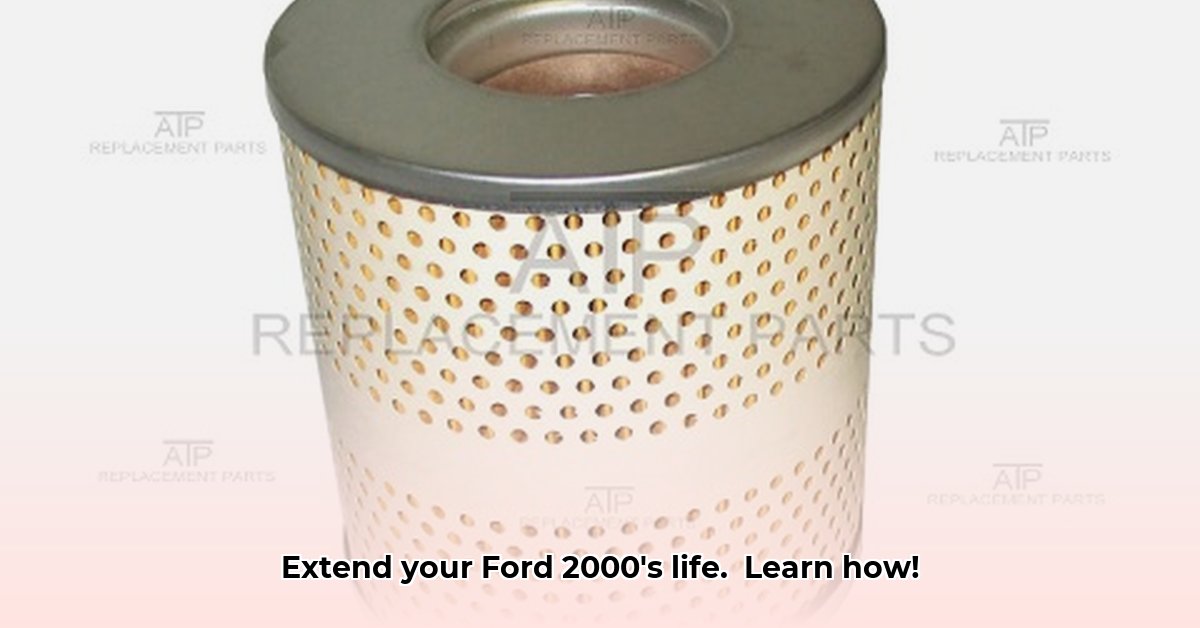
Keeping your Ford 2000 tractor running smoothly isn't just about productivity; it's about sustainable and efficient farming. This guide provides actionable steps for maintaining your tractor's oil filter, maximizing its lifespan, and minimizing your environmental impact. For more Ford tractor models, see this helpful resource: Ford Tractor Models.
Understanding Your Ford 2000's Oil Filter: The Unsung Hero
Your Ford 2000's oil filter is critical. It removes contaminants (dirt, metal particles) from the engine oil, preventing wear and tear. A neglected filter leads to costly repairs and reduced engine efficiency. Choosing the right filter ensures optimal performance and contributes to a longer tractor lifespan. This translates directly to saving money and reducing your environmental footprint.
Choosing the Right Oil Filter: OEM vs. Aftermarket
You have two main choices: Original Equipment Manufacturer (OEM) filters, designed specifically for your Ford 2000, or aftermarket options. OEM filters generally offer superior performance and reliability, but at a higher cost. Reputable aftermarket filters provide a more budget-friendly alternative, but always verify they meet your tractor's specifications. Using an incompatible filter risks premature engine wear, negating any cost savings. Does using a high-quality filter, even if more expensive upfront, ultimately save money in the long run by preventing major repairs? Absolutely.
Changing Your Ford 2000's Oil Filter: A Step-by-Step Guide
Replacing your oil filter is a simple process if done correctly. Follow these steps:
Step 1: Preparation:
- Ensure the tractor is off and cool. Hot oil is dangerous!
- Locate the oil filter (consult your owner's manual).
- Gather supplies: new filter, wrench (correct size), drain pan, and rags.
Step 2: Removing the Old Filter:
- Position the drain pan.
- Use the wrench to loosen the old filter – it might be tight.
- Unscrew by hand, letting the oil drain completely.
Step 3: Installing the New Filter:
- Lightly lubricate the new filter's rubber gasket with fresh oil.
- Screw on the new filter by hand, tightening as per manufacturer instructions (typically ¾ to 1 full turn after gasket contact). Avoid overtightening.
Step 4: Oil Change:
- Refer to your owner's manual for the correct oil type and quantity. Complete the oil change according to the manual's instructions.
Step 5: Responsible Disposal:
- Dispose of used oil and filters responsibly (check with your local recycling center).
The Long-Term Benefits: Financial Savings and Environmental Responsibility
Regular oil changes and filter replacements are essential for long-term cost savings and environmental sustainability. Preventative maintenance extends your tractor's lifespan, reducing the need for premature replacement. This translates to less waste, lower manufacturing demands, and a decreased carbon footprint. A well-maintained tractor is a testament to sustainable agriculture.
Cost-Benefit Analysis of Preventative Maintenance
Regular maintenance, while requiring upfront investment, significantly reduces long-term repair costs.
| Item | Estimated Cost Range | Recommended Frequency |
|---|---|---|
| Ford 2000 Tractor Oil Filter | $10 - $30 | With every oil change |
| Engine Oil and Oil Change | $50 - $150 | Every 50-100 operating hours |
| Preventative Maintenance Checks | Varies significantly | As per owner's manual |
Remember, preventative maintenance is key to minimizing downtime during crucial periods like planting and harvest.
Key Takeaways:
- Regular oil and filter changes are vital for engine health.
- Choosing the right filter ensures optimal performance and longevity.
- Responsible disposal of used oil and filters is crucial for environmental protection.
- Preventative maintenance reduces long-term costs and contributes to sustainable farming practices.
Always consult your Ford 2000 owner's manual for specific instructions. This guide offers general advice; your manual provides the most accurate and detailed information for your specific tractor model.